About · Frequently asked questions
You’ve got questions. We’ve got answers.
What an IBCLC actually is, when to come in, what really happens during a lactation visit, and how appointments and insurance work, the things new and expecting parents ask us most.
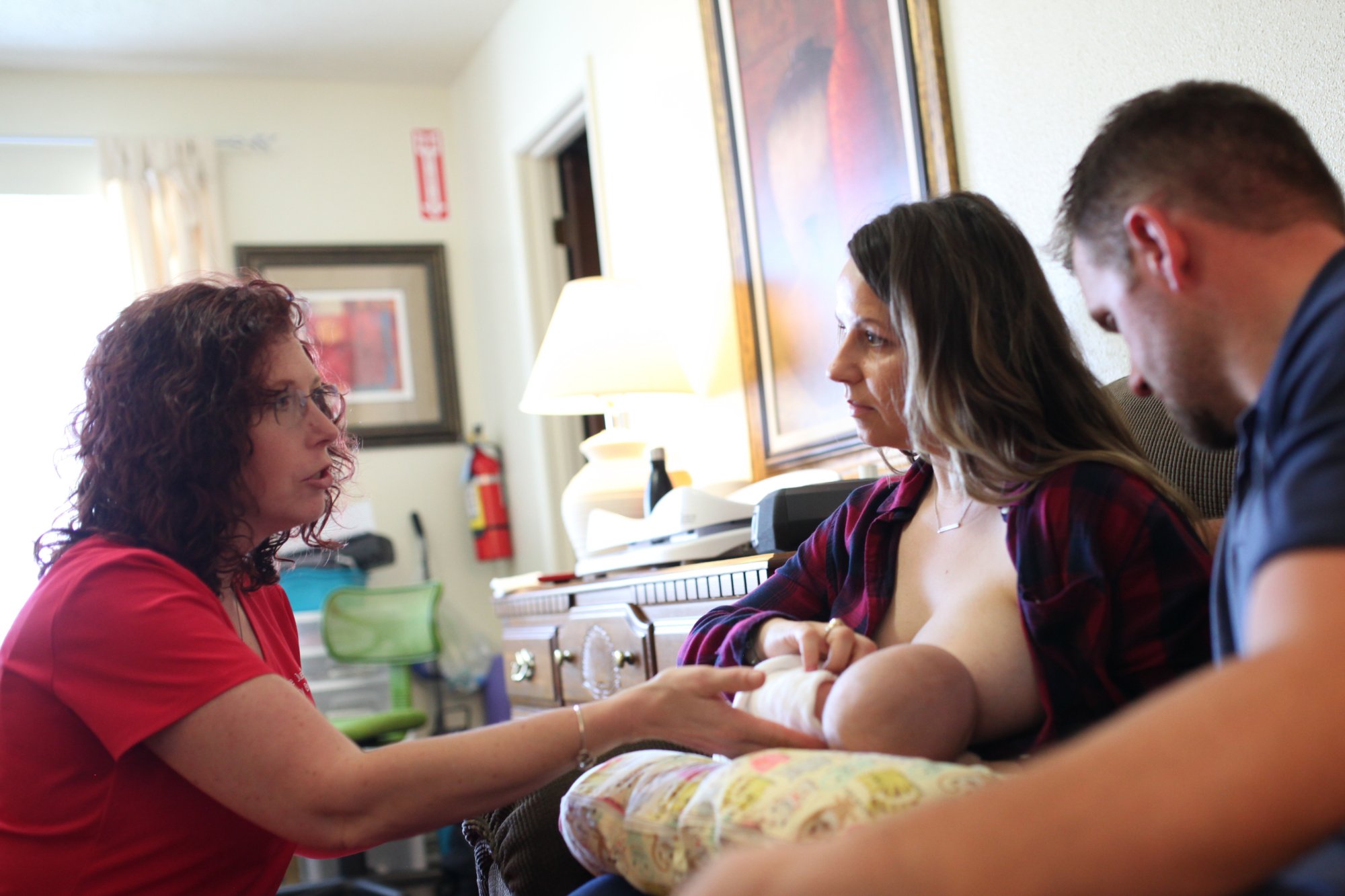
Choosing who to trust with feeding can feel overwhelming. There are so many people offering help, and so many credentials behind their names. Below, we answer the questions we hear most, from what makes an IBCLC different to what a visit looks like and how to pay for one.
The credential
Why an IBCLC?
Why should I see an IBCLC®?
It can be confusing for new parents. So many people offer to help with breastfeeding, and even when you look at credentials, there’s a dizzying number of them: breastfeeding educators, certified lactation counselors (CLCs), WIC peer counselors, La Leche League leaders, Breastfeeding USA counselors, breastfeeding specialists, registered nurses, newborn care specialists, postpartum doulas, and on and on.
Those of us in the lactation world call this the “alphabet soup” of lactation credentials.
What is an IBCLC®?
An International Board Certified Lactation Consultant® is a healthcare provider with extensive education and hands-on clinical experience supporting breastfeeding families. It is a board certification, not a state license.
What does an IBCLC do?
An IBCLC provides skilled lactation management for everything from general breastfeeding education and basic latch issues to more complex problems, such as tongue tie or slow weight gain.
How is an IBCLC different from everyone else?
Many breastfeeding helpers have some training, and some have passed an exam on basic breastfeeding knowledge. The difference is the depth of education and the hundreds of hours of supervised clinical experience required before you can even sit for the IBCLC exam. The International Board of Lactation Consultant Examiners (IBLCE)® keeps that exam comprehensive, which is why the IBCLC is considered the gold standard of lactation care.
How do you become an IBCLC?
Candidates complete a specific college curriculum of health-sciences education, at least 90 hours of lactation-specific education, and between 300 and 1,000 hours of supervised clinical experience. There are three recognized pathways to certification, and IBCLCs must re-certify every five years, so the credential always reflects current knowledge.
How is Bayou City Breastfeeding different from other practices?
Our focus
Our group practice is unlike any other. We support families through their entire feeding experience, the first two years of a baby’s life. Our goal is to help you reach your feeding goals and build your confidence as a parent, because we know that confident parents raise thriving babies.
Our experience
We have a deep bench of International Board Certified Lactation Consultants with hundreds of combined years of clinical experience. There isn’t much we haven’t seen, and even if your IBCLC hasn’t encountered your exact situation, she can call on the whole team to find answers. It shows in our families’ outcomes.
- 91%still breastfeeding at 6 months (Texas average: 58%)
- 74%still breastfeeding at 12 months (national average: 41%)
- 89%rated our support good or excellent
Timing
When should I come in?
I’m still pregnant, should I still see an IBCLC?
The best time to see an IBCLC is before your baby arrives. A prenatal visit gets things off to the strongest possible start:
- Lactation support is intimate work, and getting to know your IBCLC before any problems come up makes everything easier.
- There are often things we can do during pregnancy to set you up for a better outcome, especially if you had challenges with a previous baby.
- Hospital IBCLCs are stretched thin and can’t always spend much time with you. If we’ve already met, it’s easy for us to be available, even while you’re still in the hospital, to answer questions.
- An established relationship means your first postpartum appointment can be set up without delay.
But I already saw a lactation consultant in the hospital…
Before their first visit, clients often ask how seeing a private-practice IBCLC differs from the consultant they met in the hospital. By the end of that visit, almost everyone says they had no idea how different the two really are. Here’s why.
Time is limited
In the hospital, a lactation specialist may be expected to see 12–15 or more new parents each shift, and you might see a different person every day. Hospital IBCLCs work incredibly hard, we’ve been there, but they have a lot to teach in very little time, and families often get conflicting information from each nurse, doctor, or IBCLC they meet.
Information overload
Most new parents are exhausted from birth and may be on medications that make it hard to absorb everything they’re told. In our practice, we take the time to build a relationship that lasts your whole feeding experience.
Assessment is hard in the early days
Many hospitals don’t allow their IBCLCs to do a full infant assessment, so issues like lip and tongue ties are often missed. And most families go home after a night or two, well before milk comes in and supply can be properly assessed.
Most problems show up once you’re home
Breastfeeding problems usually appear when milk comes in, around day three to five postpartum, right when many families are left with the fewest resources.
So why choose our practice?
We have multiple IBCLCs with advanced training across many complex issues, so we can match you with the right consultant and cross-consult within the team on tricky cases. We walk beside you from the prenatal period, through the hospital and the return home, all the way to weaning.
What if I’m not having any problems yet?
Lactation support is really about education, and good education prevents problems. We love seeing clients before anything goes wrong, because we can often give guidance that helps you avoid issues entirely.
It can also be hard to know whether things are truly going well. Breastfeeding changes as your baby grows, so the questions you have will change over time, too.
What is a nursing well check, and why would I need one?
Just like the pediatrician sees your baby for regular well visits, we recommend coming to see us between those appointments. The pediatric schedule is driven by the CDC’s vaccination calendar, but babies change and grow every single day, and a nursing well check in between can head off problems before they start.
At a well check we’ll observe a feeding, talk through what to expect at your baby’s age, review developmental milestones, check growth, address any concerns, and give you a heads-up on what’s coming next.
What happens
Inside a visit
What kinds of problems and concerns can you help with?
Parents are often amazed at the range of things we help with, and it’s not just about breastfeeding! Here’s a sampling.
Prenatally
- Preparing for a successful breastfeeding experience
- Basic breastfeeding education
- Choosing a breast pump
- Prenatal nutrition for optimal breastfeeding
- Induced lactation, co-nursing, and adoptive nursing
- Reviewing difficulties from a prior breastfeeding experience
- Assessing risk factors for breastfeeding problems
Breastfeeding in the early days
- Knowing whether breastfeeding is going well
- What to do during cluster feeding
- More comfortable latch and positioning
- Making sure baby is getting enough milk
- Establishing and increasing your supply
- What to do when you make too much milk
- Breastfeeding a premature or NICU baby
- Understanding sleep and feeding patterns
Common breastfeeding concerns
- Correcting a painful latch
- Preventing and treating sore nipples
- Mastitis and plugged ducts
- Thrush and other infections
- Weaning off a nipple shield
- Nursing twins or multiples
- Medications and breastfeeding
- Planning your return to work
- Nursing strikes and refusal
- Teething, diet, alcohol, and more
Bottle feeding · breast milk or formula
- How to bottle feed
- When baby refuses the bottle
- Choosing the right bottle
- Coughing or choking at the bottle
- How much milk baby needs
- Storing breast milk safely
- Preparing formula correctly
- Bottle feeding by another caregiver
Baby concerns
- Milk allergy and other sensitivities
- Reflux and colic symptoms
- How and when to do tummy time
- Preventing and addressing a flat head
Pumping
- When and how to use your pump
- Exclusive pumping
- Selecting the correct flange size
- Power pumping to boost supply
- What to do if pumping hurts
- Building and managing a freezer stash
Tongue tie & oral function
- Assessing and managing tethered oral tissues
- Recovering from a frenectomy
- Rehabilitating oral function for the breastfeeding infant
And more
- Introducing solids and baby-led weaning
- Becoming pregnant while breastfeeding
- Tandem nursing
- Breastfeeding beyond the first year
- How to wean when you’re ready
What should I expect during my consultation?
What we do in a visit
The answer is a lot more than you might think. Most visits include:
- A health-history review for the birthing or breastfeeding parent
- A health-history review for the baby
- A breast exam and assessment
- An infant exam and assessment, including an oral assessment
- A feeding observation and assessment, a weighted feed and/or bottle-feeding observation
- A breast-pump observation and assessment
- Education on the topics that matter for your situation
- A personalized care plan
- A report for your physician(s)
How much time will it take?
A typical initial consultation runs 90 minutes, and follow-up visits are usually shorter. Before your first visit, we also have you complete detailed intake forms so we can review them in advance.
What a visit can cover
If you want the nitty-gritty of what we look at and discuss, here’s a fuller picture.
Health history · parent
- Medical and family history
- Previous pregnancy, birth, and breastfeeding experiences
- Nutrition, medications, and supplements
- Mental health and mood
- Social support and return-to-work plans
- Conditions that may affect breastfeeding
Health history · baby
- Birth history
- Diagnosed conditions and treatments
- Growth history
- Feeding history
Exams & assessment
- Parent symptom and mood screening
- Breast assessment and bra-fit
- Milk-supply assessment
- Infant oral assessment
- Weight and weight gain
- Weighted-feed and bottle assessment
Common visit topics
- Your feeding goals for the visit
- Hand expression and breast massage
- Pump selection and flange fitting
- Storing expressed milk
- Latch and positioning
- Normal feeding frequency and patterns
- Tongue/lip tie, torticollis, reflux, and more
- Gas, colic, sleep, and growth
- Increasing, decreasing, or maintaining supply
- Nipple shields and at-breast supplementers
- Formula and donor milk
- Nutrition, alcohol, and medications
Logistics
Visits, insurance & payment
What’s the difference between home, office, and virtual visits?
We offer three ways to meet. If you’re in the greater Houston area, an IBCLC can come to your home. We also have offices across Houston and in San Antonio. Or you can meet with us virtually through our HIPAA-compliant telehealth system. So what’s the difference, and how do you choose?
In-home visits
Having an IBCLC come to you is a wonderful option. You get support in your own environment, no Houston traffic, and we can work on positions that are tricky in an office, like side-lying in bed. Home visits are ideal if you haven’t been cleared to drive yet, or if you have multiples. Your IBCLC brings a scale to weigh your baby and do a weighted feed when appropriate.
Office visits
Seeing your IBCLC at one of our offices is a great choice, and because we can see more families in a day, office appointments are often available sooner. Our offices are set up more like a living room than a typical doctor’s office. Even if your first visit is at home, follow-ups can often happen in an office. There’s no trip fee for office visits.
What to bring
Bring anything you use while feeding your baby, and your breast pump if you have one. If you use powdered formula, please bring water.
Virtual visits
You might be surprised by how much we can accomplish virtually. These visits are perfect if you’re outside our service area or simply prefer to meet from home. The live visit usually runs about an hour, and we ask you to share information, photos, and videos ahead of time so we make the best use of our time together.
How do I pay for my visit, and can I use insurance?
Insurance coverage
The good news: for many families, insurance covers all or part of the visit fee. We’re in-network with many major plans, and we can bill or provide a superbill for others.
- Aetna
- In-network with most plans. Some apply a copay, coinsurance, or deductible, and a few restricted-access plans require prior approval before your visit.
- Blue Cross Blue Shield & Anthem BCBS PPO
- In-network with many plans.
- Cigna PPO
- Accepted for many plans through our partnerships.
- UnitedHealthcare
- In-network with many plans, including UMR, UHC Shared Services, AllSavers, and related networks.
- Sana Benefits & Humana
- In-network.
- TRICARE East
- We have TRICARE-certified IBCLCs and can bill your visit, with a copay.
See how insurance and billing work with us
If we don’t take your insurance
We ask that you pay at the time of service, and we offer a timely-payment discount when payment is made within one business day. We can also provide a superbill to file with your insurer. Under the Affordable Care Act, most plans must cover lactation support at no cost to the mother, so even out-of-network, you may be reimbursed.
FSA & HSA
You can use FSA or HSA funds for lactation visits. Doing so doesn’t prevent you from also seeking insurance reimbursement, though if your insurer reimburses you, you may need to redeposit the funds, so check with your accountant.
Gift cards & payment
Want to cover a visit for someone else? You can purchase a gift card in any amount. We keep a valid credit card on file and typically charge it the first business day after your visit; the timely-payment discount depends on prompt payment.
Still have questions?
Let’s talk it through
The fastest way to get answers for your baby is to get on the calendar. Tell us what’s going on, and we’ll match you with the right IBCLC, at home, in an office, or virtually.
Most plans we accept cover all or part of your visit. See how insurance works with us.